AirOps
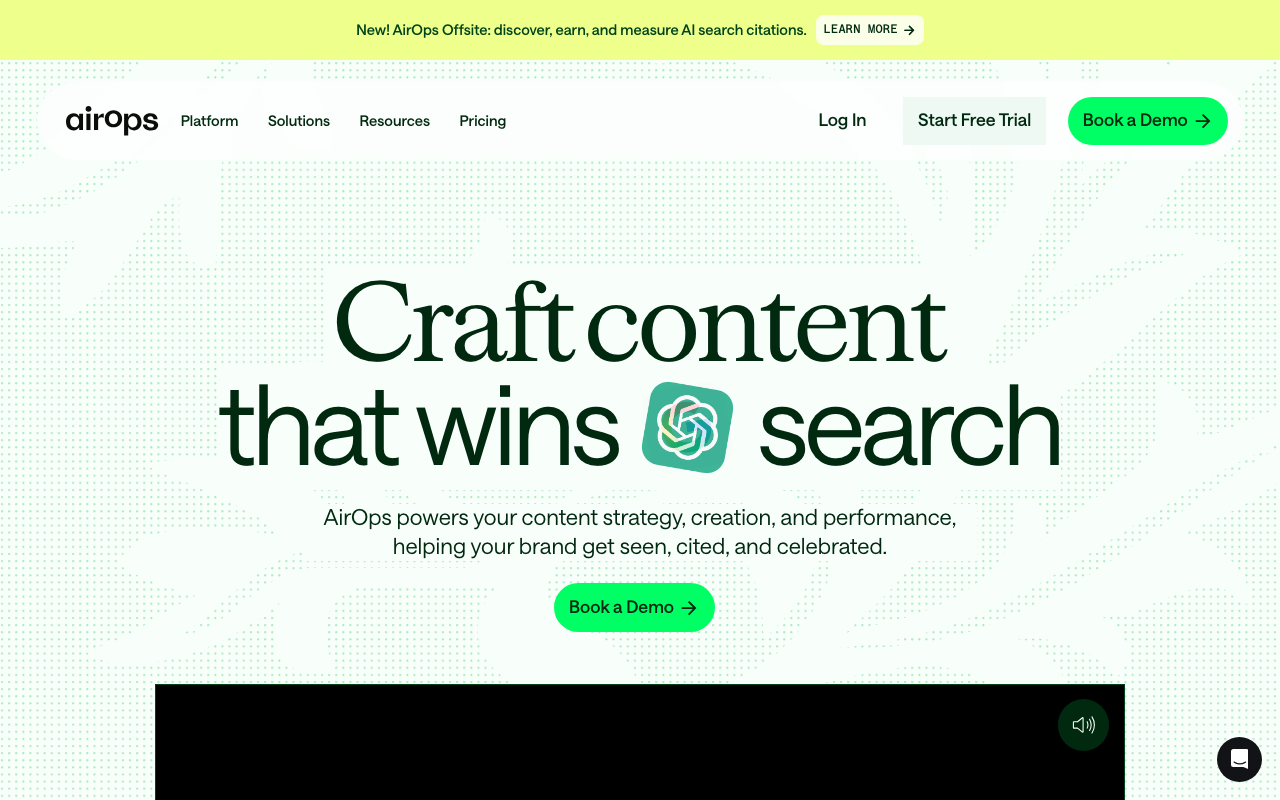
AirOps is a platform for building AI-powered content and data workflows. Teams chain steps such as research, drafting, review and publishing into repeatable processes, with built-in tools for SEO-style content and data operations. It is aimed at content teams that want scale with more control than a simple generator.
We may earn a commission if you visit through our link. The review stays focused on fit, trade-offs, and alternatives; verify current pricing and limits on the vendor site.
Mass content production with review gates.
Requires up-front workflow design and maintenance.
Paid or limited-access product; verify current plan limits before buying.
Overview
AirOps is a platform for building AI-powered content and data workflows. Teams chain steps such as research, drafting, review and publishing into repeatable processes, with built-in tools for SEO-style content and data operations. It is aimed at content teams that want scale with more control than a simple generator.
What it does
AirOps provides building blocks for AI workflows: content generation, data transformation, review and integrations with tools like Google Sheets or a CMS. Teams assemble these into reusable "recipes" that run on schedules or on demand. Its strength is repeatable pipelines rather than one-off prompts.
Benefits
- + Repeatable, structured AI workflows instead of manual prompting.
- + Combines content generation, review and data steps.
- + Integrates with the tools a content team already uses.
- + Good for scaling editorial and data-heavy tasks.
Limitations
- - Requires up-front workflow design and maintenance.
- - Output quality depends on the models and steps you configure.
- - Can be more complex than a simple generator for one-off tasks.
- - Pricing scales with usage.
FAQ
Is AirOps only for content?
It covers content and data workflows, so it suits both editorial and data tasks.
Can a non-developer use it?
Much of it is no-code recipe building, though complex steps may need help.
How is it different from a simple AI writer?
It focuses on repeatable, multi-step workflows with review and integration rather than single outputs.
Source and freshness
Updated 2026-08-18. Verify current features, pricing, limits, and terms on the official vendor site.
Practical use cases
Use AirOps for mass content production with review gates. when you want a focused tool instead of a generic AI assistant.
Turn its strongest capabilities - repeatable, structured ai workflows instead of manual prompting. combines content generation, review and data steps. - into repeatable team workflows.
Compare it against other Content Workflows tools before committing to a paid plan.
Start with the main workflow: repeatable, structured ai workflows instead of manual prompting.
✅ Pros
- +Repeatable, structured AI workflows instead of manual prompting. • Combines content generation, review and data steps. • Integrates with the tools a content team already uses. • Good for scaling editorial and data-heavy tasks.
❌ Cons
- −Requires up-front workflow design and maintenance. • Output quality depends on the models and steps you configure. • Can be more complex than a simple generator for one-off tasks. • Pricing scales with usage.
Pricing
- ✓Full features
- ✓Priority support
- ✓Advanced tools
Questions to ask before choosing AirOps
Buyer checklist- Does the current plan include the features, usage limits, and exports your workflow needs?
- Can you verify the output quality with your own content, brand rules, and compliance requirements?
- Are the related tools below a better fit for your category, budget, or team size?