Hal9
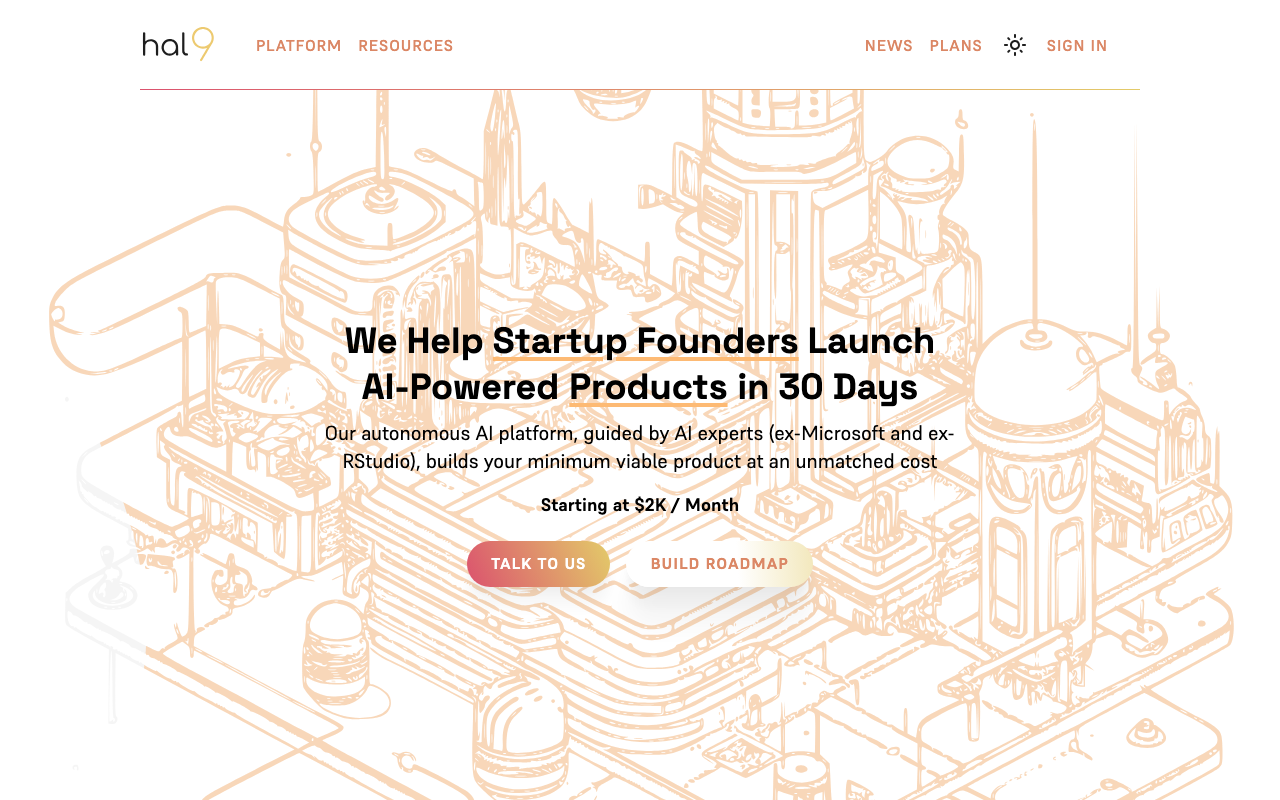
Hal9 is a platform for building AI applications that answer questions over your data. You connect a database or API, describe the data, and it generates queries and answers in a chat interface. It is aimed at teams that want natural-language access to their own data without building a bespoke Q&A system.
We may earn a commission if you visit through our link. The review stays focused on fit, trade-offs, and alternatives; verify current pricing and limits on the vendor site.
Self-service reporting for operations and finance teams.
Requires the underlying data to be connected and well-described for accurate answers.
Paid or limited-access product; verify current plan limits before buying.
Overview
Hal9 is a platform for building AI applications that answer questions over your data. You connect a database or API, describe the data, and it generates queries and answers in a chat interface. It is aimed at teams that want natural-language access to their own data without building a bespoke Q&A system.
What it does
Hal9 connects to data sources such as SQL databases, then lets users ask questions in plain language. The platform translates those questions into queries against the connected source and presents answers and explanations. It also supports building small AI apps and dashboards that expose the same Q&A to internal or external users.
Benefits
- + Puts data questions into plain language instead of SQL.
- + Reduces repeated manual reporting for common queries.
- + Can be embedded into an internal tool or dashboard.
- + Useful for teams without deep data-engineering capacity.
Limitations
- - Requires the underlying data to be connected and well-described for accurate answers.
- - Complex or ambiguous schemas produce lower-quality results.
- - Not a replacement for governed BI tooling in large enterprises.
- - For no-code data collection and enrichment, Databar is a different, complementary tool.
FAQ
Which data sources can Hal9 connect to?
It supports common SQL databases and APIs; check the official documentation for the current list.
Is it safe for production?
Security and access-control details are plan- and configuration-dependent. Review the vendor's documentation for your setup.
Do I need to write SQL?
No. Users ask questions in plain language, though admins configure the data connection.
Source and freshness
Updated 2026-08-18. Verify current features, pricing, limits, and terms on the official vendor site.
Practical use cases
Use Hal9 for self-service reporting for operations and finance teams. when you want a focused tool instead of a generic AI assistant.
Turn its strongest capabilities - puts data questions into plain language instead of sql. reduces repeated manual reporting for common queries. - into repeatable team workflows.
Compare it against other Data AI tools before committing to a paid plan.
Start with the main workflow: puts data questions into plain language instead of sql.
✅ Pros
- +Puts data questions into plain language instead of SQL. • Reduces repeated manual reporting for common queries. • Can be embedded into an internal tool or dashboard. • Useful for teams without deep data-engineering capacity.
❌ Cons
- −Requires the underlying data to be connected and well-described for accurate answers. • Complex or ambiguous schemas produce lower-quality results. • Not a replacement for governed BI tooling in large enterprises. • For no-code data collection and enrichment, Databar is a different, complementary tool.
Pricing
- ✓Full features
- ✓Priority support
- ✓Advanced tools
Questions to ask before choosing Hal9
Buyer checklist- Does the current plan include the features, usage limits, and exports your workflow needs?
- Can you verify the output quality with your own content, brand rules, and compliance requirements?
- Are the related tools below a better fit for your category, budget, or team size?